Hugs the Muscle · Supports
COMPRESSION ARM SLEEVES
Compression is what turns a sleeve from a piece of fabric into equipment: the knit hugs the muscle, damps vibration and makes the arm feel gathered rather than loose.
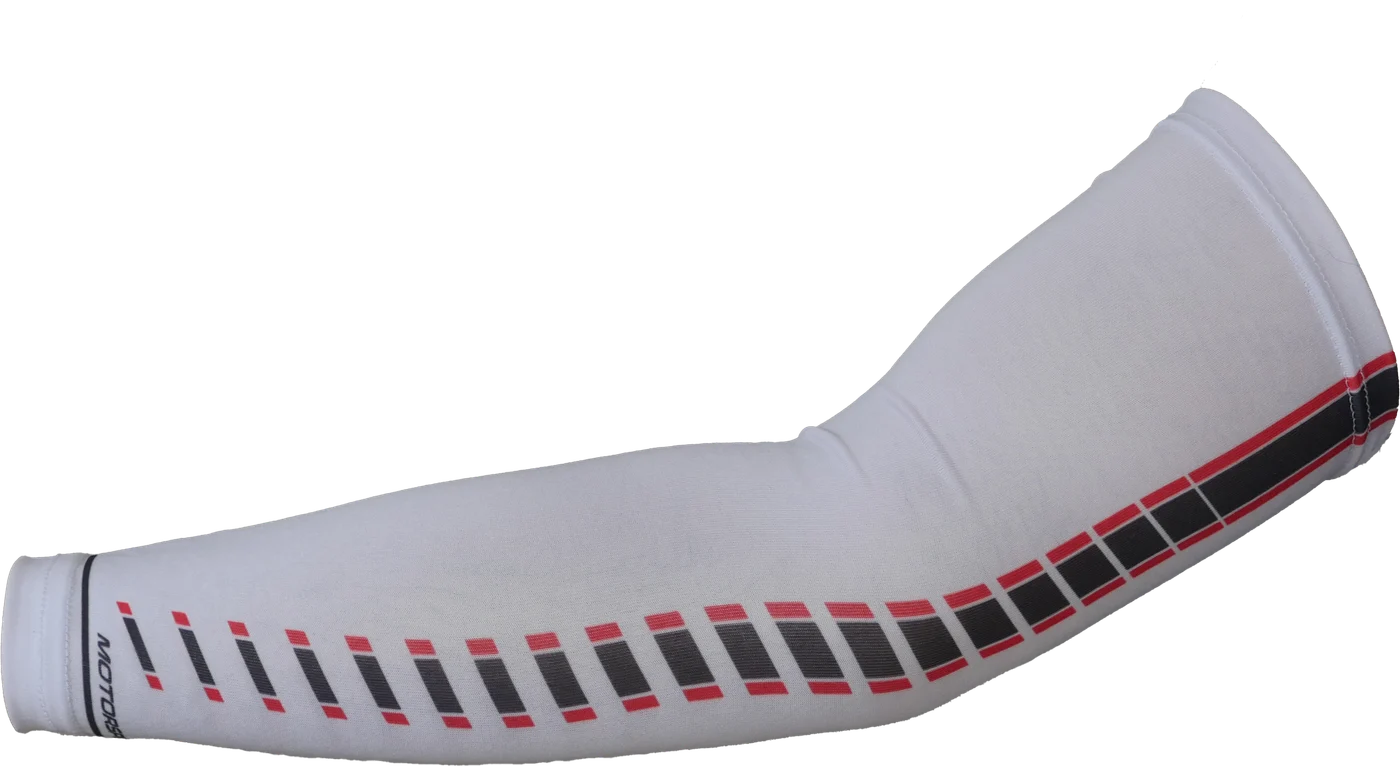
Compression is what turns a sleeve from a piece of fabric into equipment: the knit hugs the muscle, damps vibration and makes the arm feel gathered rather than loose.
Compression means the fabric applies measured pressure to the arm. A loose sleeve is just a cover; a compression sleeve holds the muscle.
What athletes report from that: less muscle vibration as the arm moves, and an arm that feels more collected. Between sets and during rest it also slows how fast the muscle cools.
The balance is the whole point: it must hold without choking. Too tight and it restricts circulation and becomes uncomfortable within hours; too loose and it does nothing at all. That balance is set by the fabric.
We use an elastic compression knit that stretches both across and along, and recovers. Recovery is the critical property: if the fabric stretches but cannot return, the sleeve loosens after a few wears and the compression is gone.
The same fabric breathes and spreads sweat across its surface - compression and moisture management are not alternatives here, they meet in one knit.
Washing decides lifespan: a tumble dryer fatigues elastic fibres and reduces compression over time. Line drying extends the life of the product noticeably.
Gym and weight training are the heaviest use. Running is common too, especially over distance.
In court sports (basketball, volleyball, handball) friction protection joins compression as a reason.
Gym and club orders usually want a logo. The thumbhole model is preferred because it stops the sleeve riding up during movement.
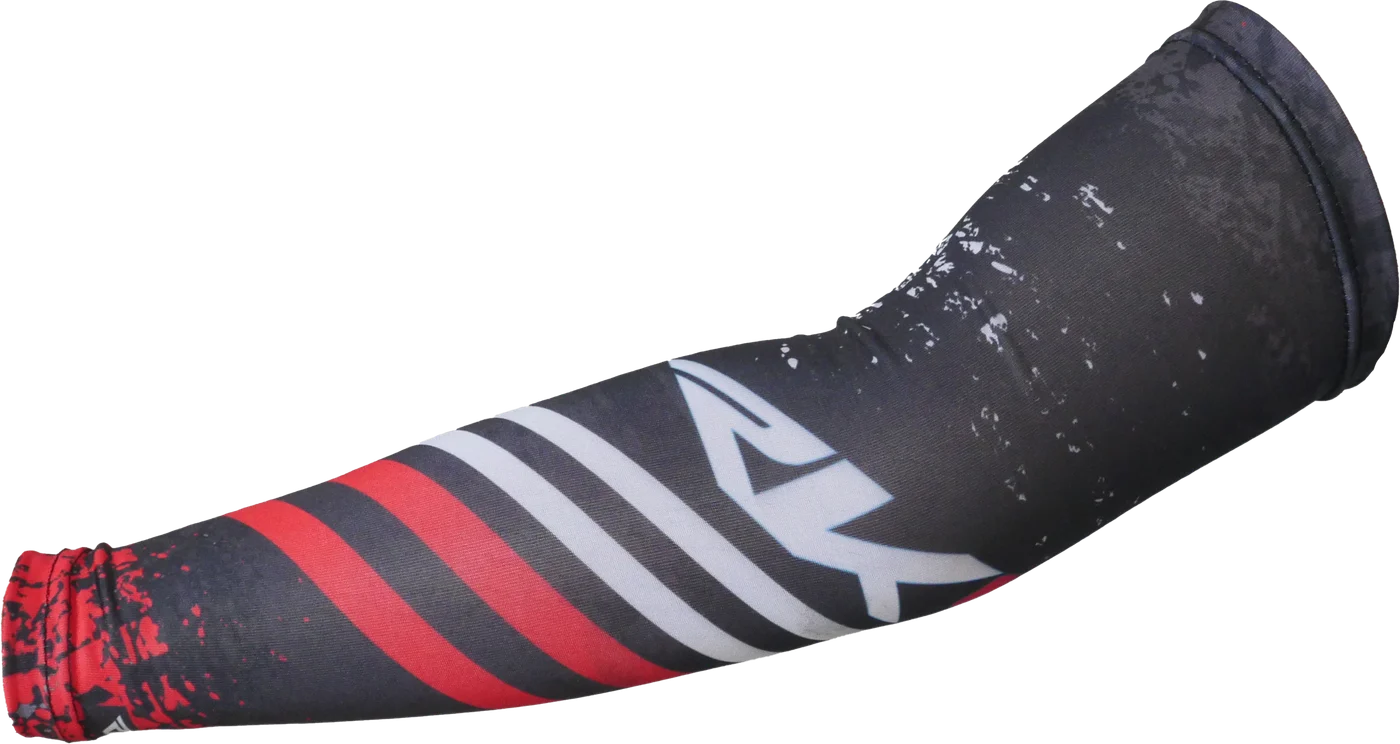
Running, fitness and court sports; compression and moisture control.
View Details →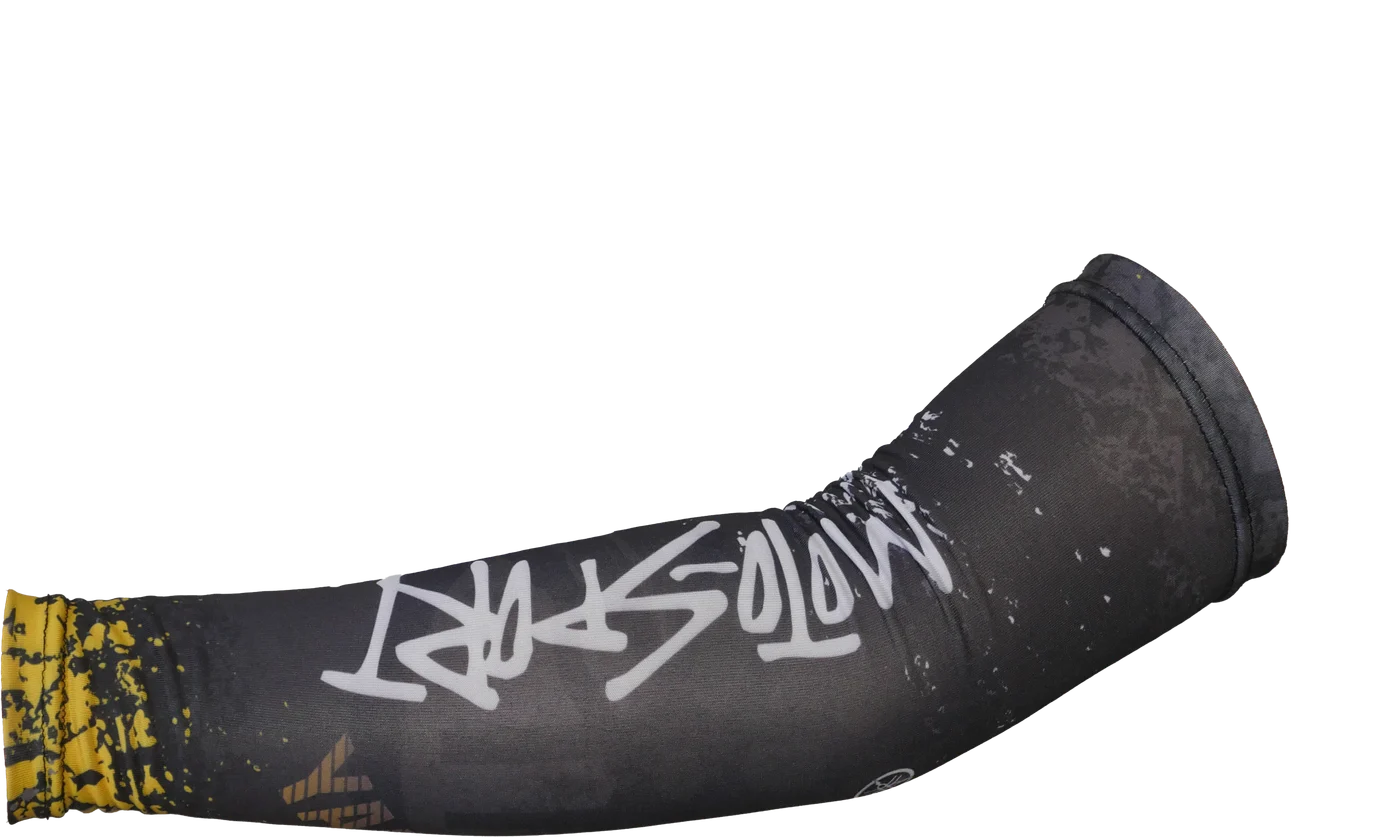
Your design, unlimited colours, photographic detail - private label ready.
View Details →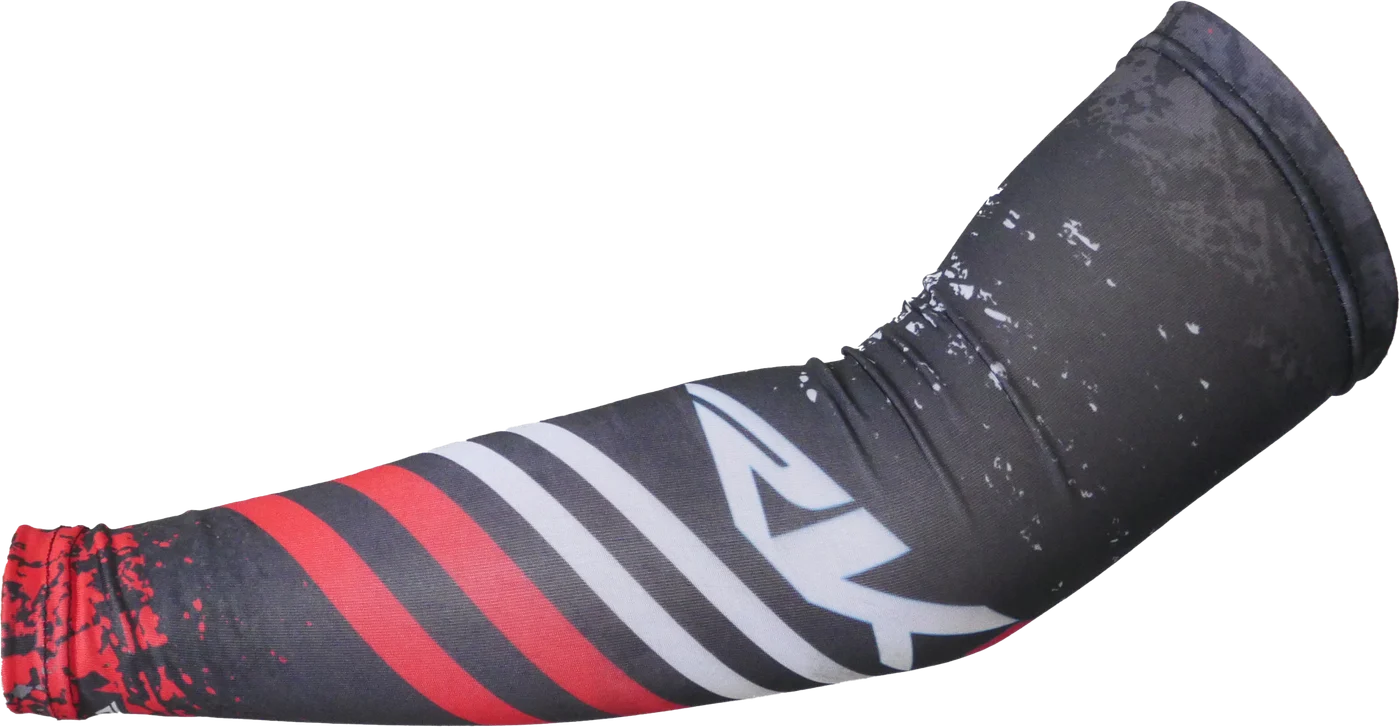
Sun, sweat and wind management; peels off into a jersey pocket.
View Details →It should hold without choking. Too tight restricts circulation and becomes uncomfortable within hours; too loose is just a cover and does nothing. That balance is set by the fabric - we use a knit that stretches both across and along and, critically, recovers.
With correct care it lasts. Lifespan is decided by elasticity: a tumble dryer fatigues elastic fibres and reduces compression over time, so line drying extends the product noticeably. Fabric recovery matters here too - a knit that stretches but cannot return loses its compression within a few wears.
They are not alternatives - they meet in the same knit. The compression fabric we use both holds the muscle and breathes, spreading sweat across the surface. You do not have to choose one and give up the other.